Strategy
Agency, freelancer or in-house: who should make your content?
Freelancer for single formats, agency for several channels, your own team once content is daily: an honest comparison and five questions that decide it.
· 5 minutes to read · MAD MIRROR STUDIOS

The short answer: a freelancer is the best choice for one clearly defined format, an agency for several channels that should look like one brand, and your own team once content is made every day. Most companies end up with a mix of partner and their own people. Up front: we are an agency, and we still write this comparison as honestly as we hold it in a first call. Some enquiries we point to a freelancer, and for clients with their own team we often take on only the production. The wrong setup costs more than any day rate: posts that never happen, films nobody uses, months where nothing moves.
Freelancers: fast, close, limited
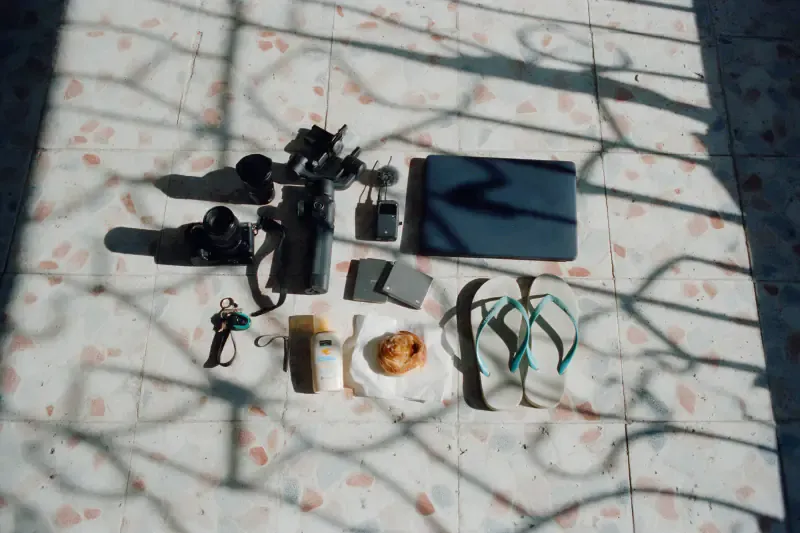
A good freelancer is unbeatable for one clearly defined format: a photo shoot, an event video, one reel a week. You talk directly to the person doing the work, decisions take minutes and costs are transparent. The limits show when several disciplines meet. Film, photos, design, website and ads from five different people rarely look like one brand, and you become the project manager who coordinates them all. Then there is availability: the best photographer on the island is booked out in July, and she can't fall ill either.

Agency: one contact, one standard, one price
An agency essentially sells responsibility. You have one contact for everything, the formats fit together, and if someone drops out that is the agency's problem, not yours. In return you pay for structure: project management, alignment, buffers. That pays off when several channels run at once, when brand and recognition matter, or when nobody in-house has the time to steer production. It doesn't pay off for a single video a year, and it doesn't pay off when the agency routes every small thing through three layers. So ask before signing who stands on set and who edits. With us they're the same people who do the strategy: a small team with a wide range of expertise and a strong network, no handoffs.
What that looks like over the years is shown by Vanilla Beach in Ibiza: the brand film in 2023, then in 2026 the website in five languages with online reservations and the social media management. The social media work brought over 500,000 impressions in 60 days, and in the second month 1,000 impressions cost 20% less than in the first. The advantage: film, website and channels speak the same visual language, and no new supplier starts from zero.

In-house: the best choice from daily demand on
Your own content team knows the company, is there every day and can react within the hour. For brands that post daily, run a community and need live moments, nothing replaces that. The math behind it: salaries, equipment, software, training, and the fact that one person rarely films, edits, photographs, designs and runs ads equally well. In-house teams are strong in the daily routine and weak on the big productions that come up twice a year. That is exactly where they bring in reinforcement.
The mix that works most often
In practice the best solution looks the same for most of our clients: one steady partner for strategy, brand film, campaigns and website, one person in-house for the daily routine, community and quick stories, and freelancers on occasion for specialist jobs like drone, food photography or voice recordings. The partner delivers the formats and templates, the internal team keeps the rhythm, and the brand stays of one piece. For hotels and beach clubs in Ibiza that means: the team on site posts stories from the venue, the partner delivers the brand film, photos and the reel stock for the season.
Five questions that decide it
If you don't know which model fits, answer these five questions in writing. The answers usually show it by themselves.
- How many pieces of content are produced per week, and how many of them need camera and editing?
- Who decides internally, and how much time does that person have for alignment?
- How many channels and languages have to be served at the same time?
- What happens when the one person who does everything is unavailable?
- Who carries responsibility when a campaign doesn't work, and who analyzes why?
Frequently asked questions
Is an agency always more expensive than a freelancer?
Per hour an agency is usually more expensive than a freelancer, per finished result not necessarily. Coordinating three freelancers, paying for rework and having formats adjusted twice often ends up above the agency price. So compare the price for the finished result, not the day rate.
Do you work alongside existing in-house teams?
Yes, with hotels, restaurants and beach clubs it is even the normal case: the team on site does stories and community, we deliver the brand film, photo production, campaigns and the templates the team keeps working with.
How do I recognize an agency that delivers?
You recognize an agency that delivers by three things: the people from the pitch are the people on set later. There is a fixed price for the result instead of open hourly accounts. And the references show work from your industry or your market, with names, not just pictures.
When does an in-house content team pay off?
An in-house content team pays off once content that needs closeness and speed has to be produced every working day: community replies, stories from the floor, live moments. Until then a steady external partner with clear delivery dates is usually cheaper and more reliable.
Do you work on location in Ibiza and Barcelona?
Yes: we live and work in Barcelona, we're in Ibiza regularly during the season, several times for regular clients, and we come to Mallorca and Menorca for shoots. Service in German, English and Spanish, content in any language.